
"Too many images, too many projects, far too much shit out there. I don't want to add to it."
Tom Rice-Smyth.
In signing off from his blog with its almost daily details of London, Tom Rice-Smyth is doing himself an injustice. His pictures are meticulous and considered, and he filters his influences (particularly William Eggleston) with intelligence and respect. He certainly wasn't adding to the shit out there.
But I think most photographers will know what he means about the sheer amount of stuff and many more will recognise the tone of self-doubt. Tom is one of those photographers who produce a continuous stream of work in response to the world around him. In his own words, he doesn't 'think or shoot in terms of ring-fenced projects'. I presume this means that any projects that he does produce come about retrospectively as acts of editing rather than premeditated picture-making.
To my mind, this approach is entirely valid. Off the top of my head, one giant of photography who mostly worked this way was Gary Winogrand who, after his death in 1984, left thousands of exposed but undeveloped rolls of Tri-X for the world to deal with. Without the story-telling instincts of a Bert Hardy or a Eugene Smith, images made within the confines of a project are often forced and literal.

Concern over the unrestrained access the web gives to anyone with a digital camera is not simply a matter of elitism and vanity. Any artist worth the name is constantly questioning and revising what they do with an almost permanent sense that the work might not quite live up to the intention behind it. It's a hard, self-searching activity where important markers of progress have traditionally come from curators, publishers, collectors and reviewers. While it's true that these people had become gatekeepers of culture, very often with dubious authority, the sytem did at least provide something to kick against or aspire to.
The web gives previously disenfranchised artists (photographers and writers in particular) a chance to stick a digit up to the established channels of exposure and canonisation. Anyone can now become a published writer or photographer no matter what the intrinsic quality of their work. Given that any audience's appreciation of art is entirely subjective, it is difficult to argue that this is not a good thing.

From the straight-shooting f64 movement in the 1930s through the independent photography movement that grew out of the art colleges of the 1970s, the validity of the artist who uses the camera in and of itself as his or her medium of expression has needed constant reaffirmation.
Photography is a fluid thing. It is subject to seismic technological shifts in a way that no other medium is. But beyond the revolutionary impacts of developments like the dry plate (which meant that you no longer had to carry a chemistry lab around with you), the box brownie, kodachrome, the Leica and digital imaging, it is about what you can do with your eyes.

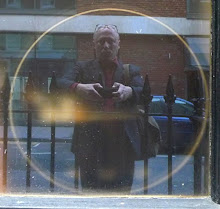
Photo copyright Tom Rice-Smyth

No comments:
Post a Comment